
One of the first questions homeowners ask when considering an extension is simple:
“How much is this actually going to cost?”
The frustrating answer is that extension costs can vary significantly from one project to another.
Two homeowners could build extensions that are exactly the same size and end up spending very different amounts depending on the design, specification, location, and complexity of the work.
The good news is that understanding what drives costs can help you budget more realistically and avoid unpleasant surprises later.
What does a house extension cost in 2026?
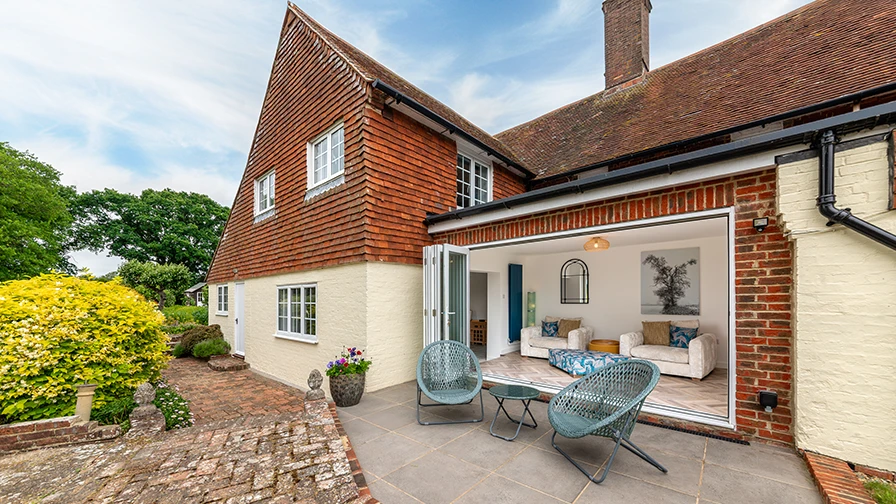
For a typical small single-storey extension (5metres by 3metres), clients often need £125,000- £150,000 project budget as a starting point. We are seeing clients spend £250,000- £300,000 to get what they really want. Especially looking at designing for their forever home, often large windows, better kitchens and nicer tiles all bump the price higher.
These figures should be viewed as starting points rather than fixed prices. Every property and every brief is different.
Why do extension costs vary so much?
Many homeowners assume extension costs are based purely on size. In reality, size is only one part of the equation. Several factors can have a significant impact on the final budget, including taste.
1. The complexity of the design
A straightforward rectangular extension is generally more economical to build than a design with multiple corners, large rooflights, vaulted ceilings, structural steelwork, or extensive glazing.
The more complex the design, the more time, labour, and specialist expertise are required.
2. Ground conditions
The ground beneath your property can have a major impact on costs.
Poor soil conditions, nearby trees, drainage issues, or the need for deeper foundations can all increase construction costs before the walls have even started going up.
Unfortunately, these are often things that cannot be fully understood until investigations have been carried out.
3. The type of room you’re creating
A new living room is generally less expensive than a kitchen extension. Kitchens require:
- Plumbing
- Electrical work
- Appliances
- Cabinetry
- Worktops
- Additional ventilation
The shell of the extension may cost the same, but the fit-out costs can vary dramatically. Kitchen installations alone can add many thousands of pounds to a project budget.
4. Glazing and doors
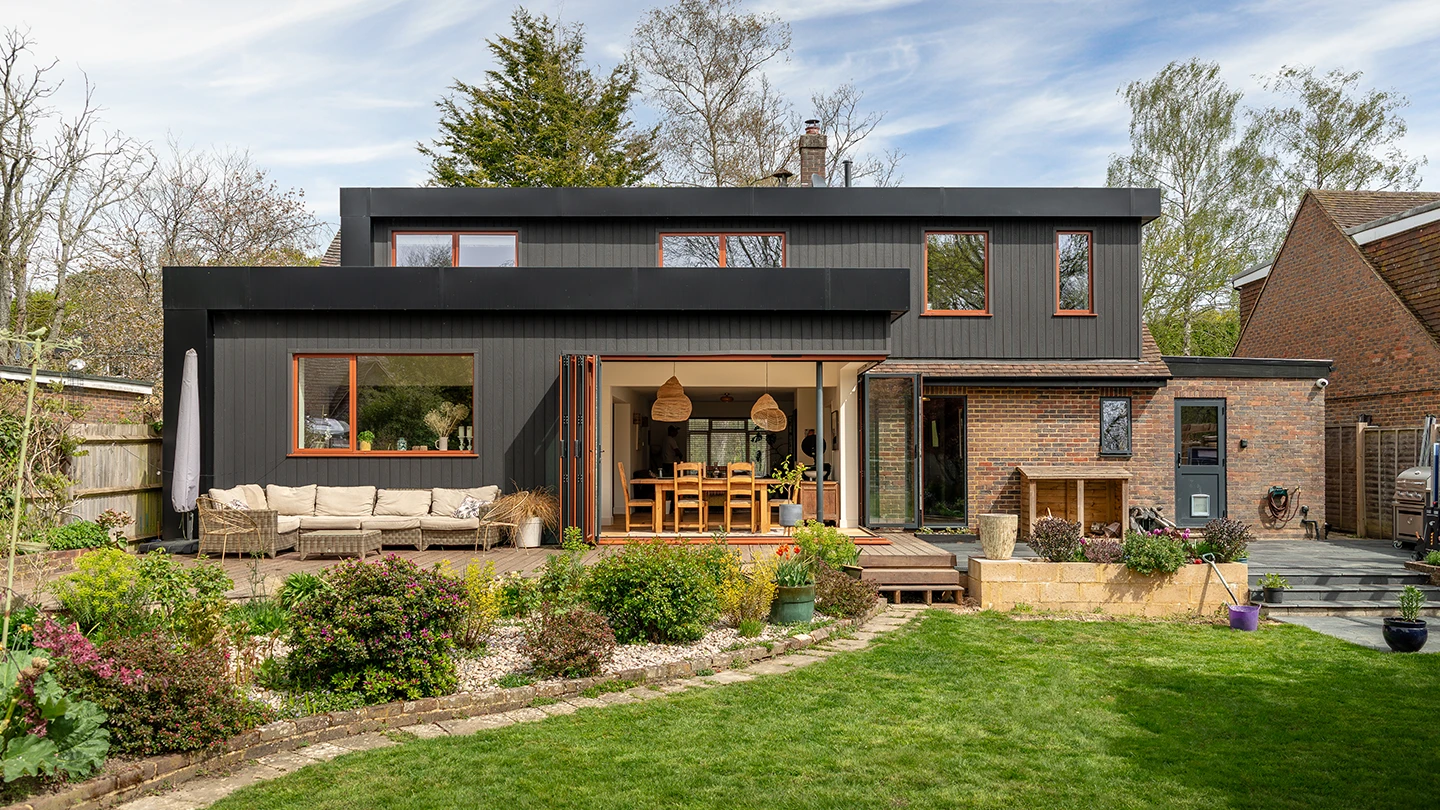
Large sliding doors, slim-framed glazing, rooflights, and feature windows are often high on homeowners’ wish lists.
They can also become one of the most significant cost items within a project.
A wall built from brickwork is generally much less expensive than a wall made predominantly from glass.
5. Specification and finishes
Floor finishes, lighting, kitchens, bathrooms, joinery, and decoration all have a huge impact on overall costs.
The difference between a standard specification and a premium specification can easily add tens of thousands of pounds to a project.
The costs many homeowners forget about
When people start budgeting, they often focus on the builder’s quote.
The reality is that construction costs are only part of the overall project budget.
Here are some of the most commonly overlooked expenses.
Architectural fees
Before construction begins, you’ll typically need:
- Measured surveys
- Existing drawings
- Design development
- Planning drawings
- Building Regulations drawings
Professional design work forms an important part of the overall project budget.
Structural engineering
Most extensions require structural calculations for foundations, steel beams, roof structures, or other load-bearing elements.
This is a separate professional service that homeowners often forget to allow for.
Planning and building regulations fees
Depending on your project, you may need:
- Planning applications
- Lawful Development Certificates
- Building Regulations applications
The fees themselves may not be enormous, but they still need to be included within the overall budget.
Party wall surveyors
If you’re building close to a neighbouring property, you may need to follow the Party Wall etc. Act 1996.
This can involve additional professional fees.
Landscaping and External Works
Many extension budgets stop at the back door.
Once construction is complete, homeowners often realise they also need:
- New patios
- Paths
- Drainage works
- Fencing
- Garden reinstatement
These costs can quickly add up.
Furniture and furnishings
A beautiful new open-plan kitchen-dining space often encourages homeowners to purchase:
- Dining tables
- Sofas
- Lighting
- Window treatments
These are not construction costs, but they still affect the total amount invested in the project.
The cost that catches People out most often
The biggest budgeting mistake we see is failing to include a contingency.
No matter how carefully a project is planned, unexpected issues can arise when work begins.
Hidden drainage runs, poor ground conditions, ageing structures, and previously concealed defects are all common discoveries during construction. We have found all sorts when starting to pull apart a house, unfortunately once problems are found they can’t be hidden away again.
A contingency allowance of around 10% is often sensible for renovation and extension projects. Many industry experts recommend setting aside a contingency fund because unforeseen costs remain one of the most common causes of budget overruns.
Can an extension still be worth It in 2026?
For many homeowners, extending remains significantly more cost-effective than moving.
When you factor in:
- Estate agent fees
- Stamp duty
- Legal fees
- Removal costs
- The cost of buying a larger home
An extension can often provide the additional space you need while allowing you to stay in the area you already love. Several industry guides continue to highlight extensions as a cost-effective alternative to moving home, particularly in higher-value areas of the South East.
The best way to understand your budget
Online cost guides can provide useful benchmarks, but every property is different.
The most accurate budgets come from understanding the property, the site constraints, the design ambitions, and the level of specification you want to achieve.
We recommend ring fencing your budget at 10% contingency, 10% professional fees, 20% VAT and 60% on construction, fixtures and fittings.
So with a £150,000 budget for a new kitchen/ diner extension with new utility room, £90,000 (excluding VAT) of that will be construction, fixtures and fittings. Take out what you want to spend on a kitchen (e.g. £25,000 with all appliances included) we are down to £65,000 for purely construction which doesn’t go far if you need steel support.
We aim to work from your budget backwards when designing but it does mean some difficult questions when we are looking at size over specification sometimes.
It’s never a judgement of how much money you have, only if it’s worth it to invest into the property.
If you’re considering an extension, speaking with an architectural consultancy like Spruce Architecture can help you understand the opportunities, costs and design options available before committing to a project.
Gives us a call or email us to discuss your ideas.
Phone: 01273 885 440
Email: Info@sprucearchitecture.com