
Across the UK, many farms and rural estates are facing a similar challenge. Land values may be strong, but day-to-day income from traditional activities is often under pressure. Rising maintenance costs, changes to agricultural subsidies and long-term tax planning are forcing many landowners to look carefully at the future of their estates.
For some families, the question is no longer simply how to manage the land today. The question is how to ensure the estate remains financially sustainable for the next generation. Diversification is often part of that answer. When approached strategically, it can help estates generate stable income while protecting long-term land value.
Why many farms and estates are rethinking their strategy
Several factors are driving landowners to consider new approaches.
Changes to agricultural support
Agricultural support systems in the UK are changing as older subsidy structures are phased out and replaced with environmental land management schemes. These changes mean some farms may receive lower direct support than in the past, depending on how land is managed.
Source: UK Department for Environment, Food & Rural Affairs agricultural transition policy.
Rising estate costs
Historic buildings, rural infrastructure and large areas of land require ongoing investment. Typical costs may include:
- Building repairs and maintenance
- Energy and utilities
- Insurance
- Staff and contractors
- Land management costs
Without additional income streams, these costs can place pressure on estate finances.
Succession and inheritance planning
Many estate owners are also thinking about succession planning. Passing land and property to the next generation requires careful financial and legal planning, particularly when considering inheritance tax and ownership structures. Professional advice is often needed to ensure diversification activity aligns with tax planning and long-term estate management.
What diversification can achieve
Diversification is not simply about trying new ideas. When done well, it can provide several long-term benefits.
Stable income streams
Diversified estates often rely on a mixture of income sources rather than a single activity. Examples may include:
- Commercial property rental
- Tourism accommodation
- Renewable energy leases
- Environmental income schemes
Multiple income streams can help reduce financial volatility.
Better use of existing assets
Many estates already own buildings or areas of land that generate limited income. Diversification can turn these assets into productive investments. Examples include:
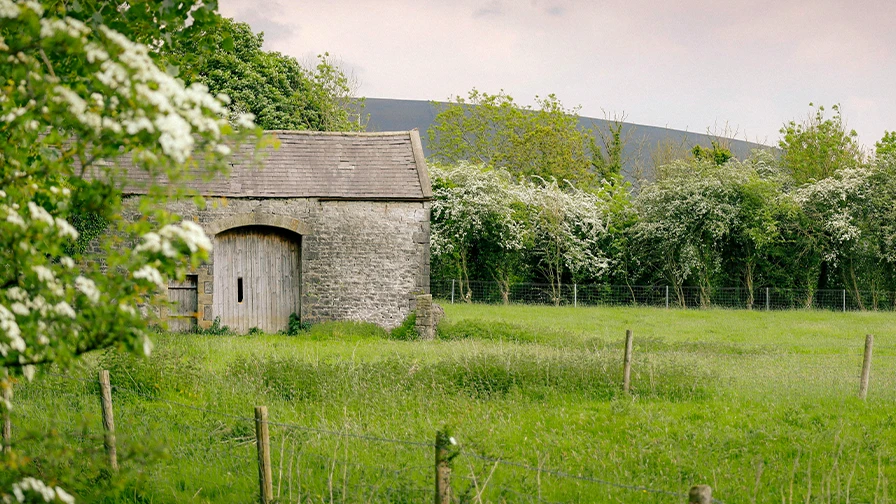
- Converting redundant barns
- Creating rural workspaces
- Leasing land for infrastructure projects
- Establishing tourism facilities
Increased long-term land value
Strategic development and diversification can also improve the overall value of rural property by creating new revenue streams.
Common diversification approaches
Different estates pursue different strategies depending on their land, location and objectives.
Property and building conversion
Many farms diversify by converting existing buildings into:
- Offices
- Workshops
- Storage units
- Holiday accommodation
According to UK government farm business data, letting buildings is the most common diversification activity in England.
Source: DEFRA Farm Business Survey.
Tourism and visitor businesses
Tourism businesses may include:
- Holiday cottages
- Glamping sites
- Wedding venues
- Camping or caravan parks
These projects rely heavily on local demand and location.
Renewable energy projects
Landowners sometimes lease land for energy infrastructure such as:
- Solar farms
- Wind turbines
- Battery storage facilities
Income structures vary depending on the project and developer agreements.
Environmental land use
New environmental markets are creating additional opportunities for landowners. Examples include:
- Biodiversity net gain habitat banks
- Woodland carbon projects
- Environmental land management payments
These opportunities often involve long-term land management commitments.
Mistakes that can cause diversification projects to struggle
Many diversification projects begin with good intentions but encounter problems later. Several issues appear regularly.
Focusing on one idea too early
Landowners sometimes become attached to a single idea before understanding whether the site supports it. Testing several possible uses can help identify stronger opportunities.
Underestimating planning constraints
Planning policy, access requirements and environmental designations can affect what development is possible. Early planning review is often critical.
Underestimating capital costs
Construction costs, infrastructure upgrades and professional fees can significantly affect the financial viability of a project. Understanding likely costs early helps avoid unrealistic expectations.
Lack of clear strategy
Some estates begin projects without defining clear financial goals or long-term management plans. Diversification works best when it forms part of a broader estate strategy.
Taking a structured approach
Many estates now begin diversification by reviewing their land and buildings in a structured way. This typically includes examining:
- Existing buildings and land assets
- Planning policy and constraints
- Infrastructure such as access and utilities
- Local demand for different uses
- Estimated construction costs
- Potential revenue streams
A structured review helps identify which ideas are realistic and which may carry higher risk.
Planning for the next generation
Future-proofing a farm or estate is rarely about one single project.
It usually involves creating a balanced strategy that considers:
- Financial sustainability
- Long-term land management
- Family succession planning
- Environmental responsibilities
Diversification can play an important role in that strategy when it is approached carefully and based on realistic assumptions.
Exploring the potential of your land or estate
At Spruce Architecture we work with farmers, landowners and estate managers who are considering how their land or buildings might generate additional income. Sometimes the starting point is a redundant building. In other cases it is a wider estate strategy looking at several diversification options.
If you are beginning to think about the future of your farm or estate, an early conversation can help clarify what opportunities may be realistic and what factors should be considered first.
You can arrange a meeting with our team to discuss the potential of your site and the options worth exploring further, enquire today.