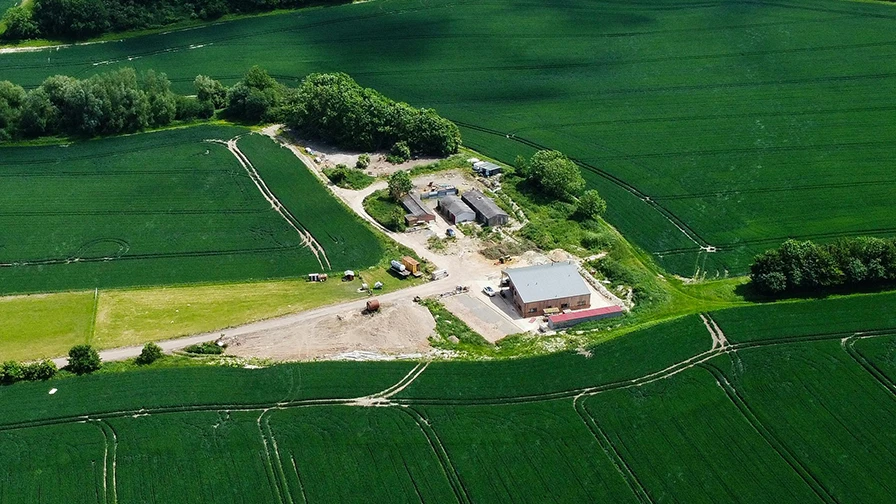
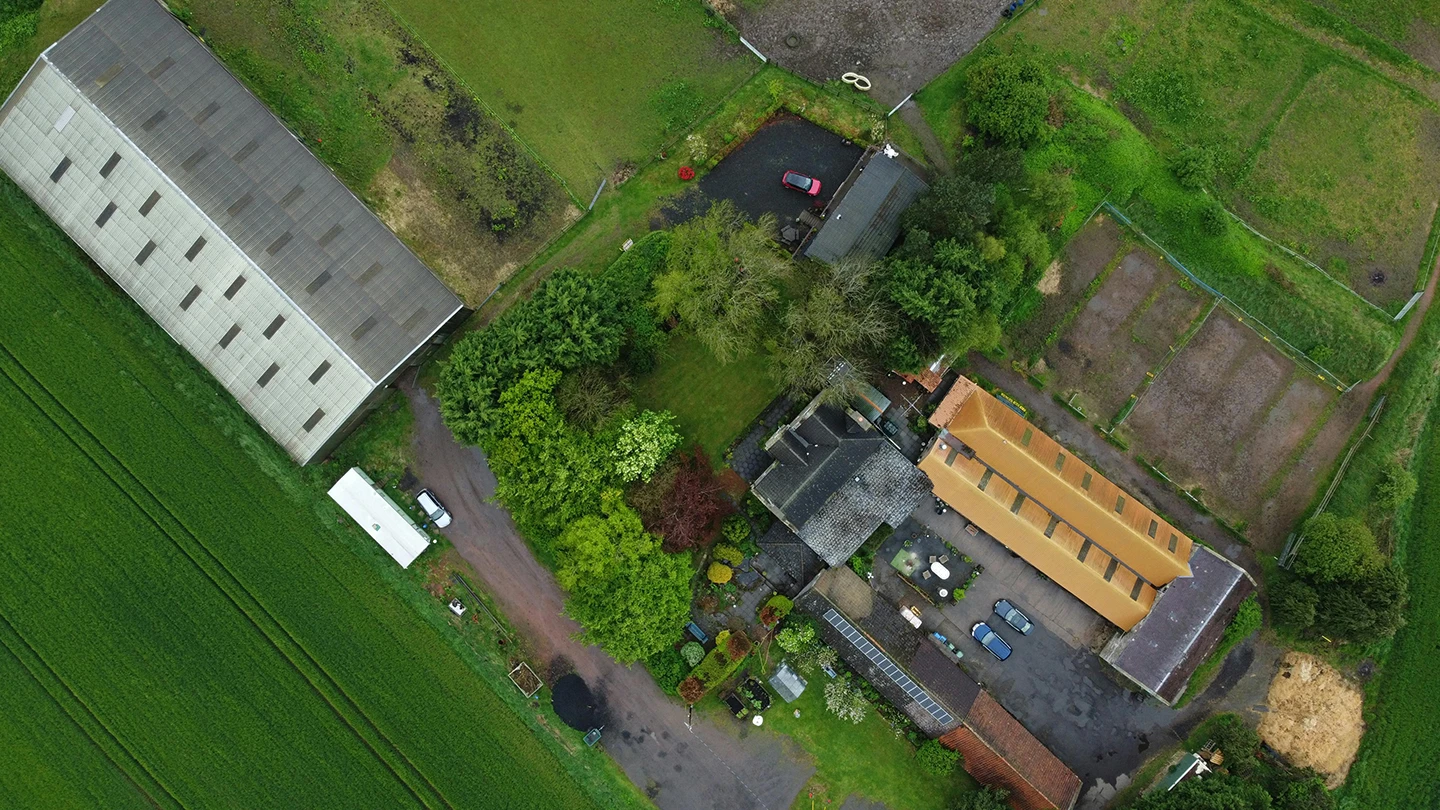

Many farms and rural estates have assets that are not working as hard as they could. Barns sit unused, areas of land produce very little income, and older buildings slowly become maintenance liabilities.
At the same time, the cost of running rural property continues to rise. Energy, insurance, labour and repairs all add pressure, while traditional agricultural income can fluctuate from year to year.
Because of this, many landowners are asking the same question. How can my land generate more reliable income?
Diversification is now common across the UK. According to the UK government, around half of farm businesses in England earn income from letting out buildings, making it the most common diversification activity. Government data also shows that renewable energy is now used by roughly a quarter of farm businesses as a secondary income source.
Source: UK Department for Environment, Food & Rural Affairs farm business diversification statistics.
The opportunity is real, but not every idea works in every location. Planning policy, access, local demand and capital costs all play an important role. Below are some of the most common ways rural landowners are generating additional income from their property.
1. Letting out farm buildings
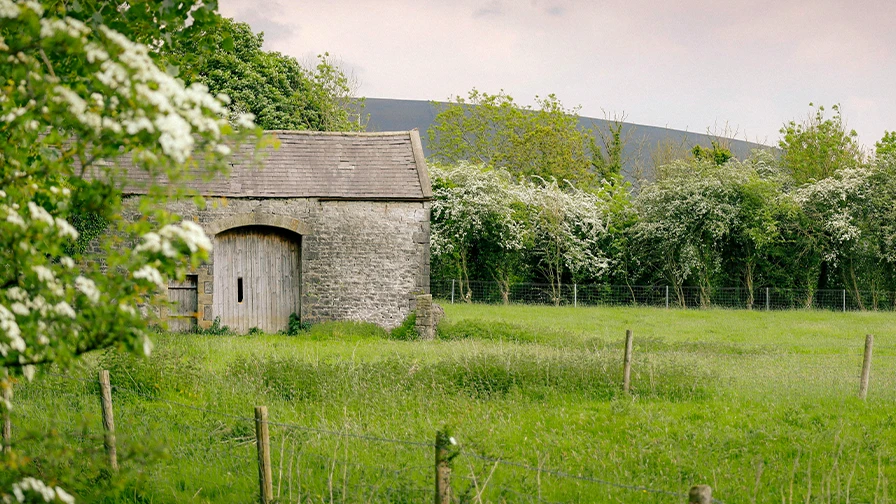
Redundant agricultural buildings are often the simplest starting point for diversification. Old barns, storage buildings and agricultural sheds can often be converted into commercial units or rented out for storage. Examples include:
- Small business workshops
- Vehicle storage
- Light industrial units
- Trade workshops
Demand for rural workspace has increased as more businesses move away from expensive town centres. Government figures show that letting buildings is the most common diversification activity and generates an average additional income of about £27,900 per farm business each year.
Source: DEFRA Farm Business Survey diversification statistics.
2. Converting barns into offices or workspaces
Rural office space has grown in popularity in recent years. Many small businesses prefer quiet countryside locations over city centres. Barn conversions can provide:
- Offices for local businesses
- Co working space
- Studios for designers or craftspeople
- Professional consulting rooms
Planning permission requirements vary, but some conversions can fall under permitted development rights depending on the building and location.
3. Self storage units on land
Self storage is one of the fastest growing property sectors in the UK.
Farmers and estate owners often install:
- Container storage
- Lock up units
- Vehicle storage compounds
These can work well near towns, commuter routes and growing residential areas.
Storage units often require less ongoing management compared with tourism businesses.
4. Holiday lets
Rural tourism remains strong across many parts of the UK. Examples include:
- Converted barns
- Holiday cottages
- Farm stays
- Lodges or cabins
Demand is often strongest in areas with natural beauty, coastal access or nearby attractions. Holiday accommodation can generate strong revenue, but occupancy rates and operating costs need to be considered carefully.
5. Glamping sites
Glamping has become popular across the UK as people look for outdoor experiences without traditional camping. Common options include:
- Safari tents
- Shepherd’s huts
- Treehouses
- Yurts
These businesses can work particularly well on scenic land or near national parks.
Planning permission is often required, and access, parking and utilities must be considered early.
6. Wedding and events venues
Large barns and attractive countryside settings are often well suited to weddings and private events. Some estates have successfully converted agricultural buildings into venues for:
- Weddings
- Corporate retreats
- Private parties
- Workshops and training events
These projects can require higher investment and careful planning but can generate significant revenue when well managed.
7. Farm shops and food businesses
Farm shops allow landowners to sell produce directly to customers while supporting local food suppliers. Some examples include:
- Farm shops
- Farm to table restaurants
- Cafés
- Local produce markets
These businesses rely heavily on location and passing traffic, so they work best near towns or busy rural routes.
8. Camping or caravan sites
Simple camping areas or caravan pitches can provide seasonal income from land that has limited agricultural productivity. Options include:
- Basic campsites
- Touring caravan pitches
- Motorhome stopovers
Facilities and planning permissions vary depending on the scale of the site.
9. Renewable energy projects
Renewable energy projects can provide long term lease income for landowners. Examples include:
- Solar farms
- Wind turbines
- Battery storage facilities
- Grid infrastructure
Some projects are developed directly by landowners, while others involve leasing land to energy developers. Income varies depending on location, grid access and project size.
10. Biodiversity net gain and environmental markets
Environmental markets are becoming an emerging source of rural income. In England, new development projects must now deliver biodiversity net gain, which means developers often need to purchase biodiversity units created on other land. This allows some landowners to generate income by creating habitat banks or restoring ecological areas.
Source: UK government biodiversity net gain policy.
Other environmental opportunities include carbon credits and woodland creation schemes. These markets are still evolving and require careful long term planning.
11. Film and photography locations
Many rural estates earn additional income by renting land or buildings as filming locations. Television productions, advertising campaigns and photography projects often look for countryside settings. Income depends on the scale of the production and the uniqueness of the location.
12. Outdoor activities and experiences
Experiential tourism is growing as people look for activities rather than accommodation alone. Examples include:
- Fishing lakes
- Outdoor activity centres
- Farm experience days
- Woodland courses or workshops
These businesses often work best where there is strong tourism demand nearby.
Choosing the right diversification option
The ideas above can all work in the right circumstances. However, successful projects usually start with a careful review of several key factors.
- Planning policy
- Access and infrastructure
- Local demand
- Construction costs
- Management capacity
- Capital availability
These factors determine whether a project is commercially viable. Many diversification ideas look attractive at first but struggle once planning constraints or development costs become clear.
A structured way to assess your land
Before committing significant capital to a diversification project, it helps to step back and review the opportunities properly. A structured review can help answer questions such as:
- Which diversification options are realistic on your land
- What planning policy will support
- What projects may be too risky or expensive
- What level of income may be achievable
You can arrange a meeting with our team to discuss the potential of your site and the options worth exploring further, enquire today.