
Searches for “how to start glamping on my land” and “glamping business setup UK” have increased in recent years as farmers and landowners explore new income streams.
Glamping is part of a broader trend known as agritourism, where farms and rural estates generate revenue by hosting visitors. For many landowners, the appeal is straightforward. A small number of accommodation units can sometimes generate income from land that previously produced little or none.
However, setting up a glamping site involves more than placing a few pods or shepherd’s huts in a field. Planning rules, licensing requirements and infrastructure considerations all play a role.
This guide explains the key factors landowners should understand before starting a glamping business on their land.
Why glamping has become a popular farm diversification idea
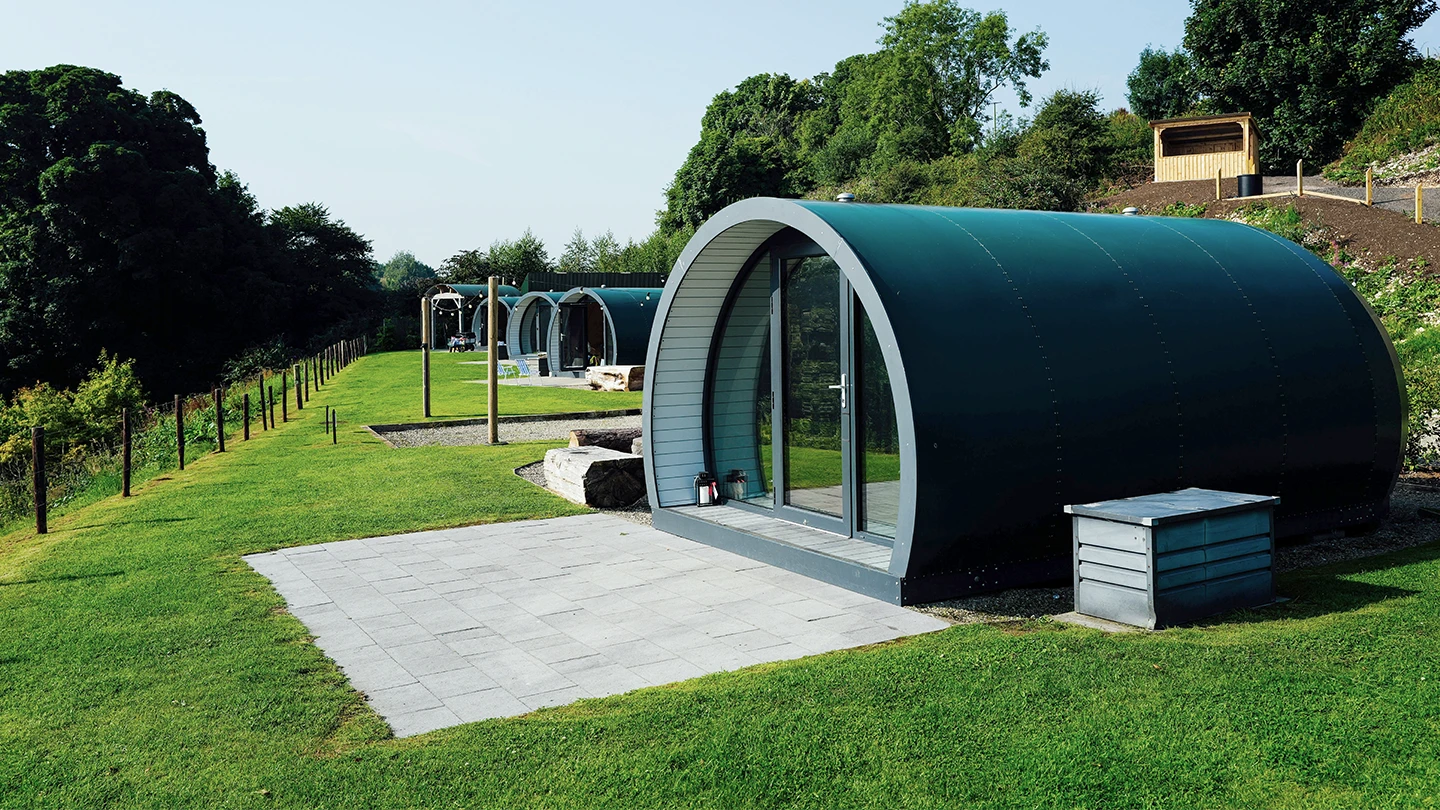
Glamping combines outdoor accommodation with more comfort than traditional camping. Typical structures include:
- Glamping pods
- Shepherd’s huts
- Safari tents
- Yurts
- Cabins or eco-lodges
These units are often located in rural settings where visitors are looking for countryside experiences.
For landowners, the business model can work because accommodation income is not tied to agricultural yields. Instead, revenue is linked to visitor demand.
Small sites often start with just a few units and expand over time as demand grows.
Do you need planning permission for glamping?
In most cases, yes.
Using agricultural land for visitor accommodation usually requires planning permission because it represents a change of land use from agriculture to tourism.
Local planning authorities typically assess:
- Impact on the landscape
- Traffic and access
- Drainage and utilities
- Ecological considerations
- Visual appearance of structures
Even if the structures are movable, planning permission may still be required if they are used for commercial accommodation.
Temporary camping rules on agricultural land
There are limited situations where land can be used temporarily for camping without full planning permission. For example, tents can sometimes be used for up to 42 consecutive days or 60 days in a year before a campsite licence is required, depending on local authority rules.
However, these temporary allowances are generally not suitable for a permanent glamping business. Once accommodation is offered to the public on an ongoing basis, planning permission is typically needed.
Caravan and campsite licensing
If your glamping units are classed as caravans or movable accommodation, you may also need a caravan site licence from your local council.
Under UK regulations:
- Planning permission must be granted before a licence can be issued
- The licence may set conditions on layout, spacing and facilities
- Councils can specify sanitation, fire safety and infrastructure requirements
These requirements exist to ensure public safety for visitors staying on the site.
Infrastructure requirements many landowners overlook
When people search for “glamping on my land”, they often focus on the accommodation units themselves. In practice, infrastructure often represents the largest part of the investment.
Typical requirements include:
Access and parking
Visitors must be able to reach the site safely. This may involve:
- Upgrading farm tracks
- Creating parking areas
- Improving visibility at road junctions
Utilities
Depending on the site, you may need:
- Electricity supply
- Water supply
- Wastewater systems
- Waste collection
Guest facilities
Even small sites usually need:
- Toilets and showers
- Washing facilities
- Safe lighting and pathways
Local authorities may require these elements as part of planning or licensing conditions.
Choosing the right location on your land
Not every field is suitable for a glamping site. Successful sites often share several characteristics:
- Attractive views or natural features
- Distance from busy farm operations
- Safe vehicle access
- Natural screening from neighbouring properties
Planning approval is also more likely if the development sits comfortably within the surrounding landscape.
Starting small is often the safest approach
Many successful rural accommodation businesses start with only a few units. A small site can help you test:
- Local demand
- Operational workload
- Marketing channels
- Visitor feedback
Expanding later may be easier once the concept has proven viable.
Understanding the long-term potential of your land
Glamping can be one way to generate income from rural property, but it is not the only option. Other diversification strategies might include:
- Holiday cottages
- Rural workspace conversions
- Renewable energy projects
- Environmental land management schemes
The right opportunity depends on the location, buildings and long-term goals of the estate.
Exploring whether glamping could work on your land
At Spruce Architecture we often speak to landowners who are exploring farm diversification ideas and looking for practical ways to generate income from rural land.
Sometimes glamping is a strong opportunity. In other cases, planning constraints or infrastructure costs mean another option may work better.
If you are considering starting a glamping business on your land, we can review your site, planning context and existing buildings to help you understand what development opportunities may realistically exist.
An early conversation can often save months of uncertainty and help you focus on the opportunities most likely to succeed.
You can arrange a meeting with our team to discuss the potential of your site and the options worth exploring further, enquire today.