
Large-scale solar installation on a working farm
Jevington, East Sussex
The starting point
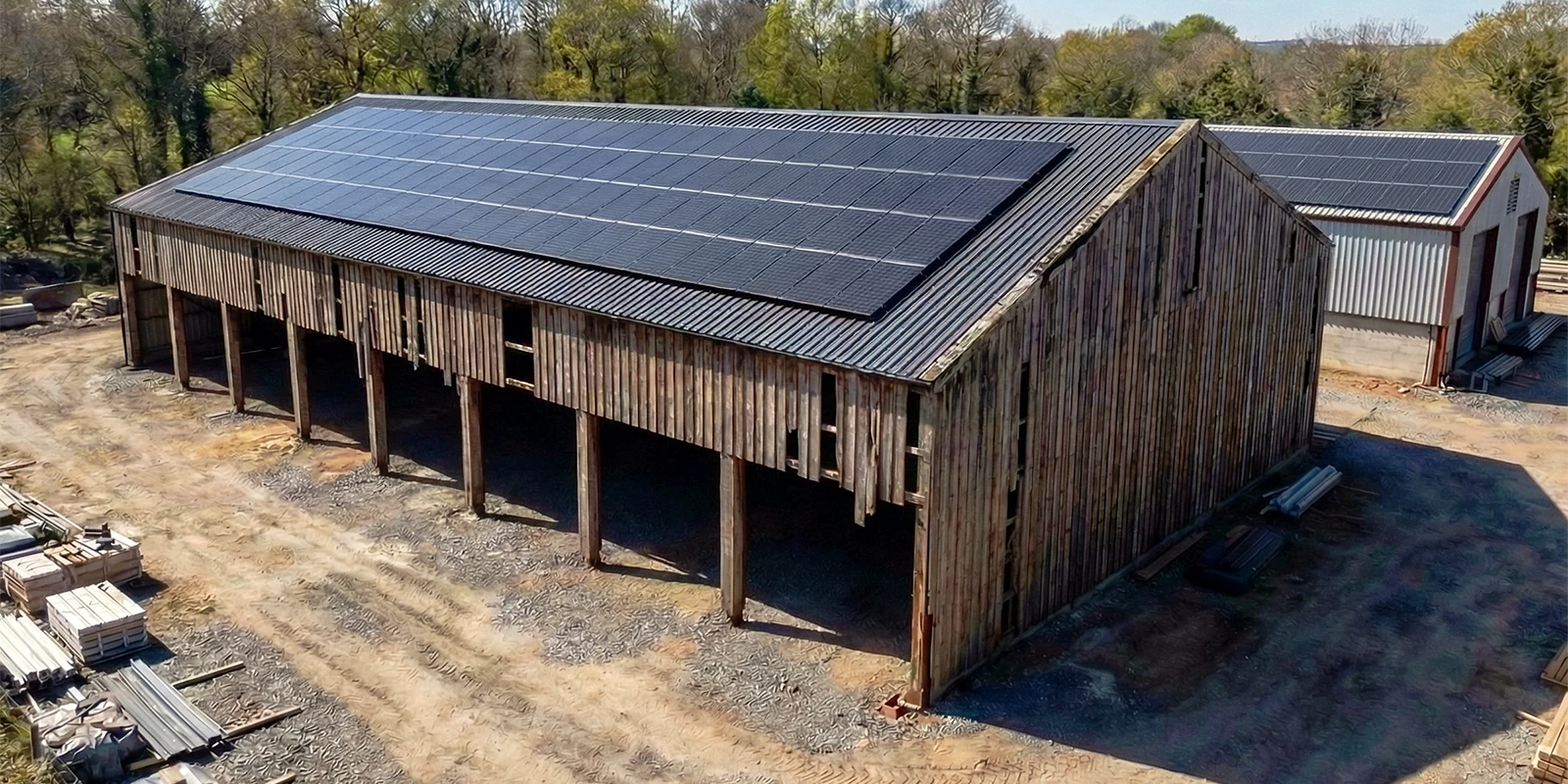
This project began with something most farms already have: big roofs pointing in the right direction. Two large agricultural barns with expansive south facing slopes, sitting on a working farm with high energy demands. The opportunity was obvious. The question was whether planning permission would follow.
The opportunity
The farm wasn’t looking to build something new. It was looking to make better use of what was already there. By installing solar panels across the existing barns, it could reduce its reliance on external energy, bring down long term running costs, and put its buildings to work in a more meaningful way.
What was proposed
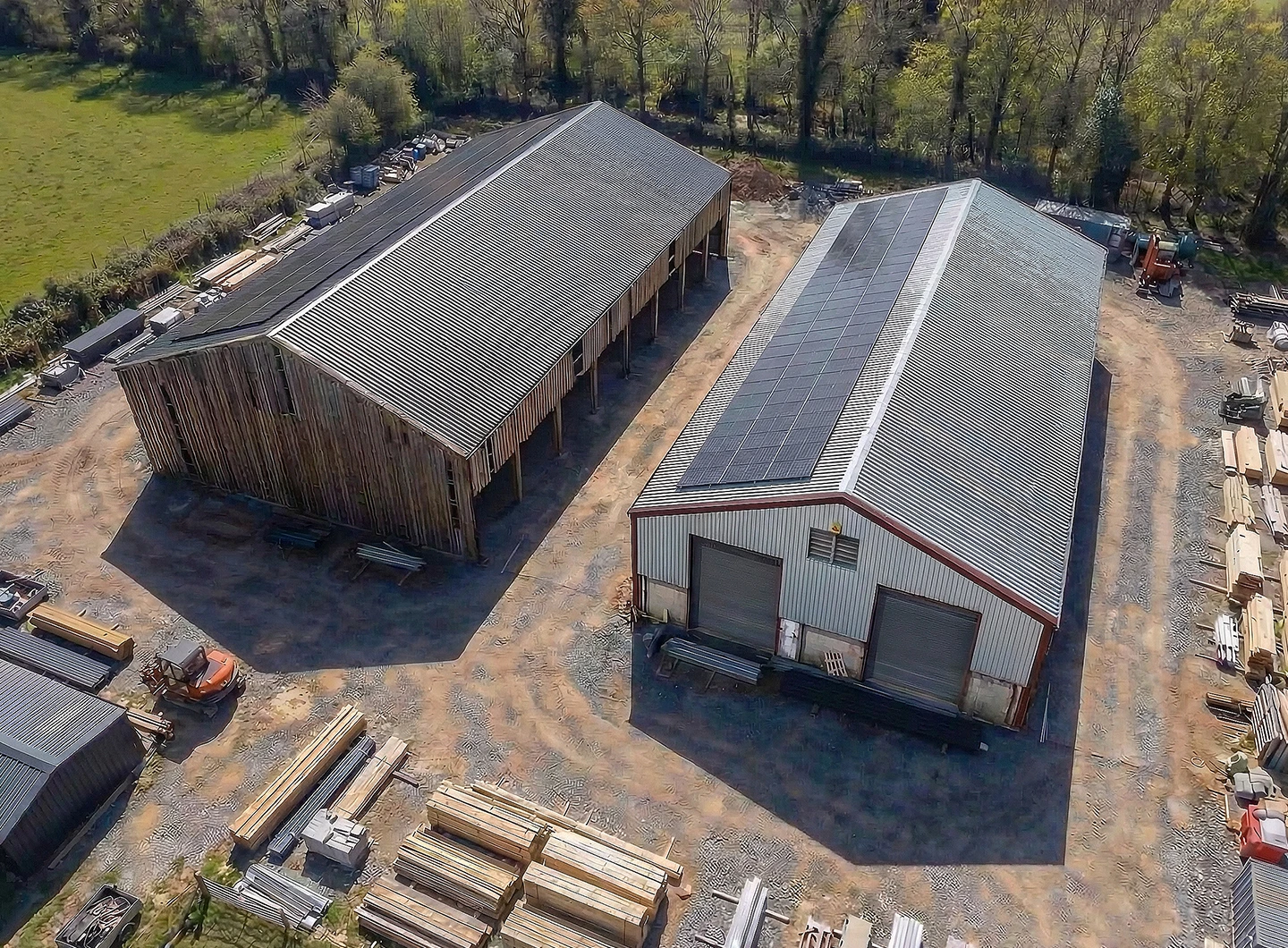
Working in collaboration with Parker Dann Planning Consultants, a coordinated application was developed for the installation of over 150 solar panels across the two barns. By concentrating the layout on the south facing slopes, the design could maximise energy generation while keeping the overall appearance clean and considered. The system was sized to cover a significant portion of the farm’s power needs.
The challenge
Agricultural sites come with their own set of sensitivities. Visual impact carries real weight in open countryside, and planning policy has to be addressed carefully and thoroughly. It is never simply a case of installing panels and hoping for the best. A proposal like this has to show not just that the panels can go there, but that they genuinely belong there.
The approach
The application was built around a clear and well reasoned strategy. The panel layout was designed to follow the existing roof form as closely as possible, keeping the installation visually consistent and avoiding anything that might look bolted on or out of place. Focusing on south facing elevations helped maximise efficiency while reducing any unnecessary visual impact elsewhere on the buildings.
Alongside the design work, the application was supported by thorough documentation setting out how the system would contribute to the farm’s day to day operations and reduce its dependence on non renewable energy. The collaboration with Parker Dann meant the planning case was robust, well structured, and properly evidenced.
The outcome
Planning permission was successfully secured. The farm can now move forward with an installation that supports its operations, reduces its energy costs, and meaningfully lowers its environmental impact.
Why it works
The success of this project came down to a combination of thoughtful design and careful planning. Rather than introducing something new into the landscape, the proposal worked with what was already there. The panels were designed to sit comfortably within the rural setting, the application was grounded in a clear planning strategy, and the whole process was handled through strong collaboration between the design and planning teams.
Looking ahead
With permission in place, the farm is now in a position to generate its own renewable energy and future proof the way it operates. It is a practical, well considered step forward. Not a dramatic overhaul, just a smarter way of working with the buildings and resources that were already there.