
New homes in a sensitive rural setting
Hailsham, East Sussex
Overview
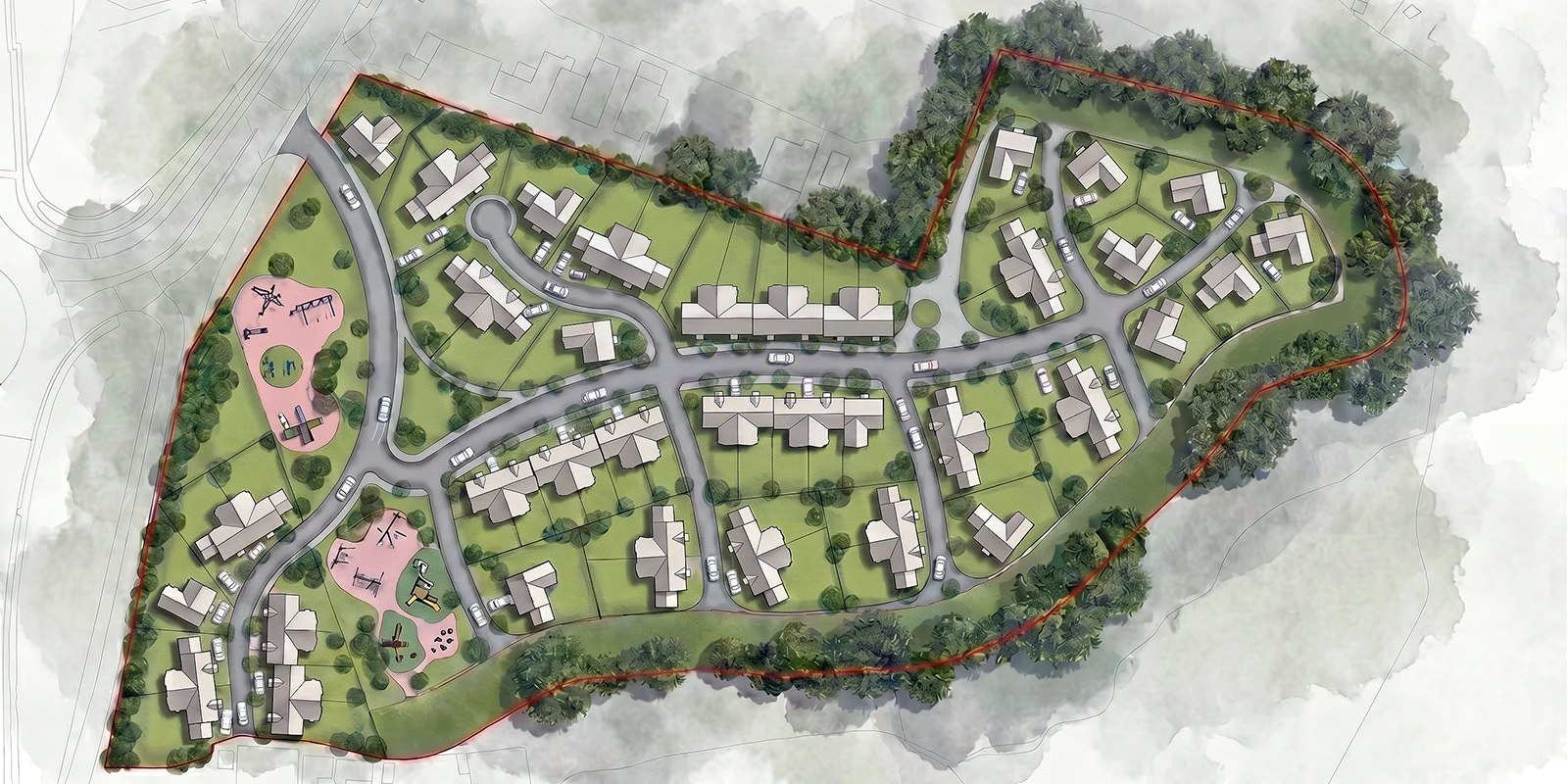
Set within open agricultural fields near Hailsham, East Sussex, this residential development delivers over 50 new homes, carefully arranged to respond to the surrounding landscape and environmental constraints. The scheme includes a mix of detached, semi-detached, and terraced housing, supported by generous green infrastructure, parking provision, and two dedicated children’s play areas.
The site sits within a sensitive rural context, with ancient woodland to the south and north-east, existing hedgerow networks across the fields, and overhead pylons crossing part of the site. Each of these factors played a key role in shaping the layout and design response.
The challenge
Designing for this site meant working with a number of fixed constraints from the outset.
The presence of ancient woodland nearby required a careful approach to safeguarding long-term ecological value and maintaining appropriate separation between development and sensitive habitats. Existing hedgerows and field boundaries also needed to be retained and strengthened, rather than removed or fragmented.
Access presented another key challenge. Direct entry from the main A-road was not achievable, meaning alternative access strategies had to be explored and integrated without compromising safety, legibility, or the overall layout.
On top of this, overhead pylons and their associated buffer requirements influenced both positioning and building height considerations, requiring careful coordination to ensure compliance while still achieving a coherent and attractive streetscape.
Our approach
Rather than treating the constraints as limitations, the layout was shaped around them. Existing hedgerows were used as a framework for the masterplan, helping to define character areas and reinforce the rural grain of the landscape. Where possible, these natural boundaries were enhanced with additional planting to strengthen biodiversity and visual screening.
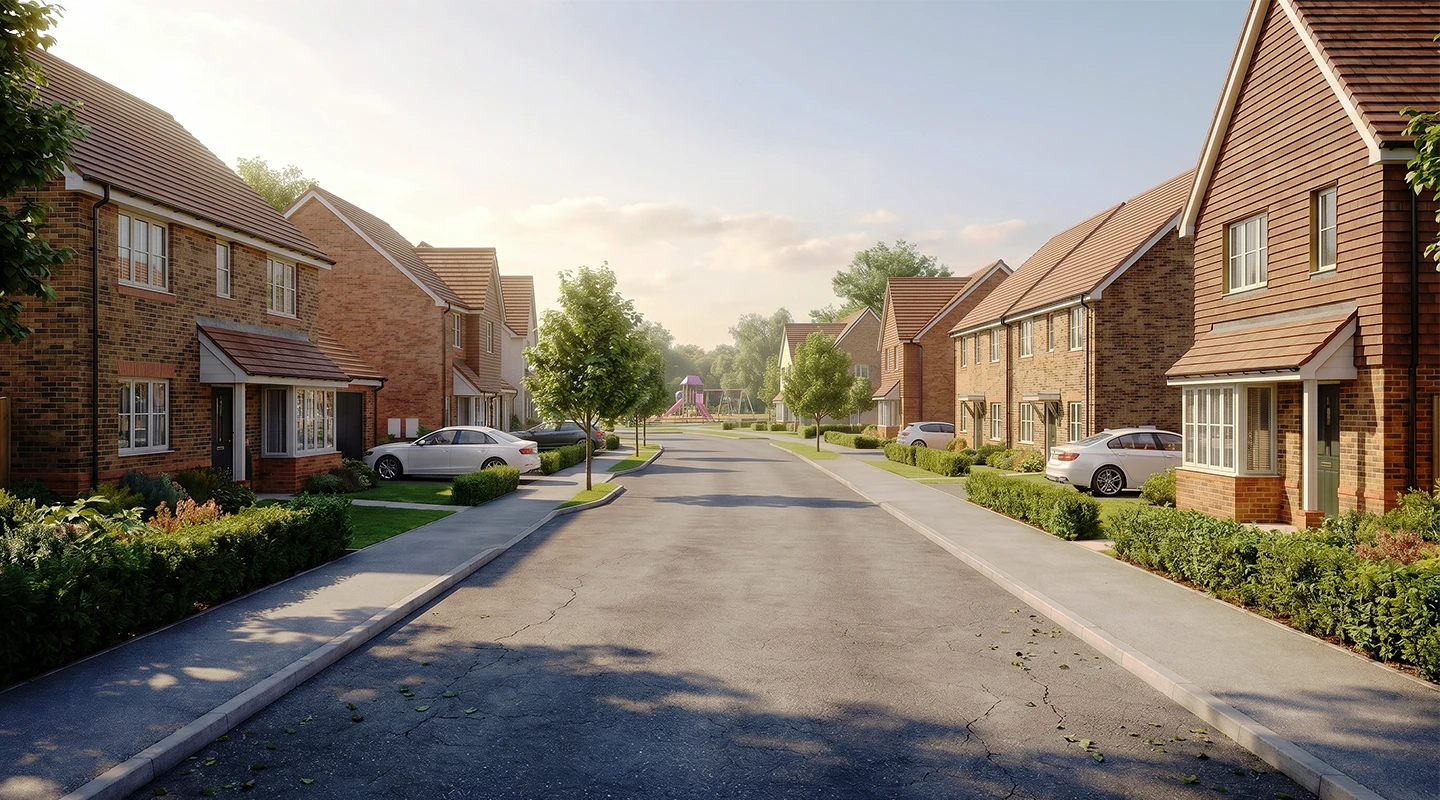
The housing mix was arranged to create a balanced and varied streetscape, moving from higher density terraced homes through to more spacious detached plots, responding to edges, views, and relationships with the surrounding countryside.
Access was resolved through a carefully considered alternative route, designed to integrate safely with the wider highway network while maintaining a clear sense of arrival into the development.
The pylons were acknowledged early in the design process, with built form and open space positioned to avoid conflict and reduce visual impact where possible. Rather than trying to conceal infrastructure, the design works with it, ensuring safe clearances while maintaining usable, well-designed public realm.
Two children’s play areas were integrated into the landscape strategy, positioned to be accessible to residents while also benefiting from natural surveillance and green outlooks. Parking was distributed across the scheme to avoid dominance at street level, supporting a more landscaped, residential character.
Outcome
The final masterplan delivers a well-balanced residential community that sits comfortably within its rural edge setting. By working with existing landscape structure, rather than against it, the development retains a strong connection to its agricultural surroundings while introducing new homes in a way that feels considered and appropriate to place.
The result is a layout that prioritises green infrastructure, respects ecological constraints, and creates a clear hierarchy of streets, homes, and open spaces. Despite the complexity of the site, the scheme provides a practical, legible, and attractive new neighbourhood that responds carefully to both its environmental context and infrastructure constraints.